Understanding Septic Tank Odors
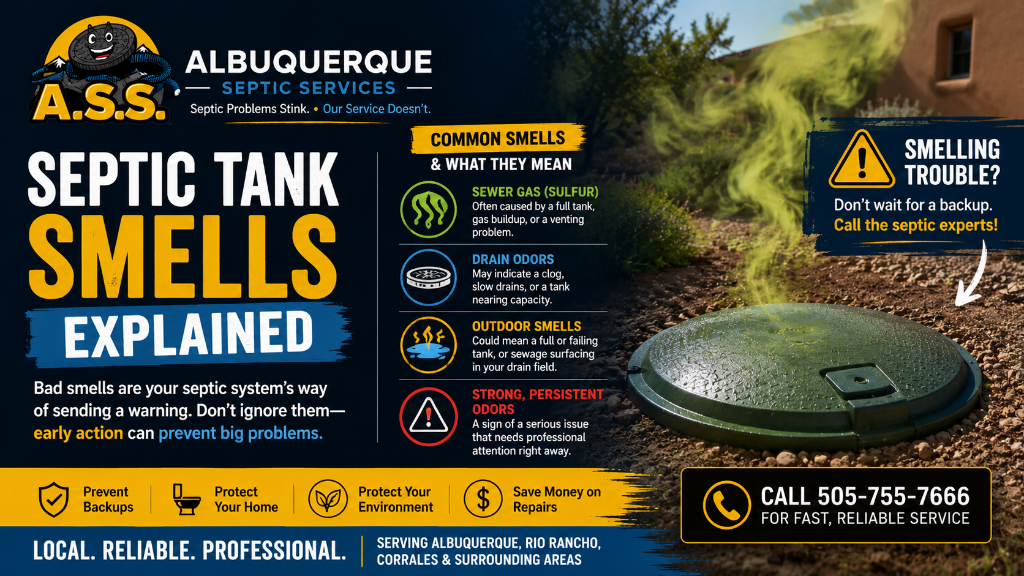
Nobody wants to smell sewage in or around their home. But beyond the unpleasantness, septic odors are your system trying to tell you something. Understanding what different smells mean — and where they're coming from — helps you catch problems before they escalate.
Where Septic Smells Come From
Septic systems produce hydrogen sulfide gas as organic matter breaks down. In a healthy system, these gases are vented safely through your home's plumbing vent stack. When you start smelling them, something is disrupting that process.
Odors Inside the House
Rotten Egg or Sulfur Smell in Bathrooms
This is the most common indoor septic odor. It usually originates near drains or toilets.
Possible causes:
- Dry P-traps — the U-shaped pipes under sinks that hold water as a gas barrier
- A full or overloaded septic tank
- A blocked or damaged plumbing vent stack
- Cracked drain lines allowing gases to escape inside the home
Quick check: Pour water down any floor drains or infrequently used sinks to refill the P-trap. If the smell persists after that, it's likely a tank or vent issue.
Smell That Appears Only When Flushing
If odors appear specifically when water flows, your tank may be full and pushing gases back up through the water seal. This is a strong indicator that it's time to pump.
Odors Outside the House
Near the Septic Tank Lid
A faint smell right near the tank access lid on warm days can be normal — heat causes gases to expand. But a strong, persistent outdoor odor near the lid suggests:
- A cracked or improperly sealed tank lid
- The tank is overfull
- A problem with the inlet or outlet baffle
Over the Drain Field
This is a serious warning. A functioning drain field should produce no odor. Smells over the drain field indicate:
- The drain field is saturated because the tank is too full
- Drain field failure — effluent is surfacing instead of absorbing
Don't ignore this. Surfacing effluent is both a health hazard and a regulatory violation in New Mexico.
After Heavy Rain
Rain can temporarily raise the water table — especially near the Rio Grande in the Corrales and North Valley areas. Rising groundwater can push gases back up through your drain field temporarily. If it persists beyond a day or two after rain, have the system inspected.
When to Call Immediately
Don't wait if you notice:
- Sewage smell inside your home with no clear source
- Odors accompanied by slow drains or backups
- Wet or discolored ground near the drain field
- A smell that has persisted for more than a day or two
The Bottom Line
Septic smells aren't something to mask with air freshener. They're signals. Address them early — a small issue today can turn into a major repair if left alone.