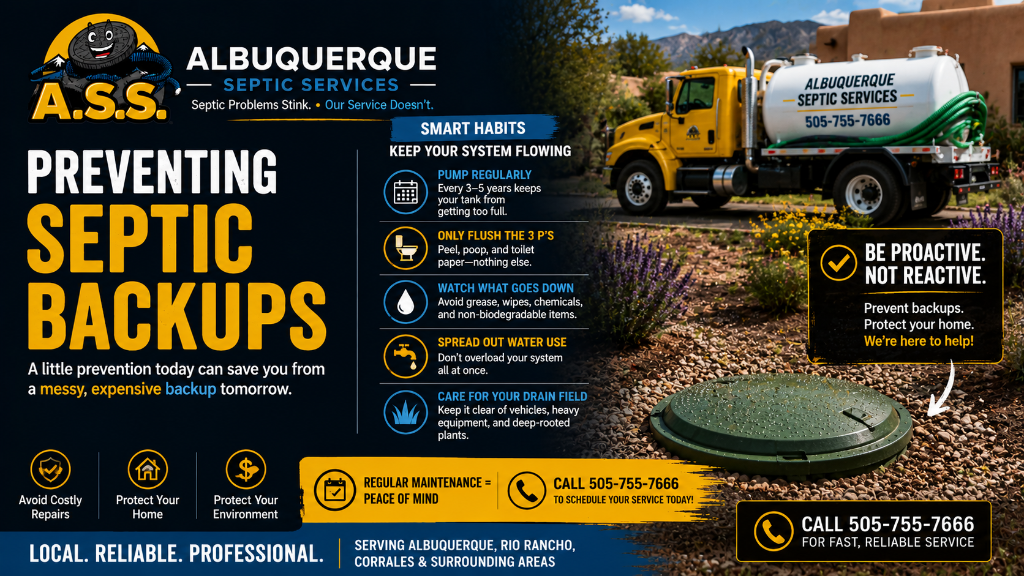
How to Prevent Septic Backups Before They Happen
A septic backup is one of the worst home emergencies a homeowner can face — raw sewage coming up through your drains, toilets, or floor drains. It's a health hazard, an expensive cleanup, and nearly always avoidable.
Here's how to keep it from ever happening to you.
What Actually Causes Septic Backups?
Before you can prevent them, it helps to understand the cause:
- Overfull tank — Solids have built up to the point where incoming wastewater has nowhere to go
- Blocked baffles — The inlet or outlet baffles that control tank flow become clogged
- Clogged drain lines — Foreign objects or grease have blocked pipes between home and tank
- Saturated drain field — The field can't absorb effluent fast enough
- Structural failure — Cracked tanks, collapsed pipes, or root intrusion
Most of these causes are preventable with regular maintenance and smart everyday habits.
Strategy 1: Pump on Schedule
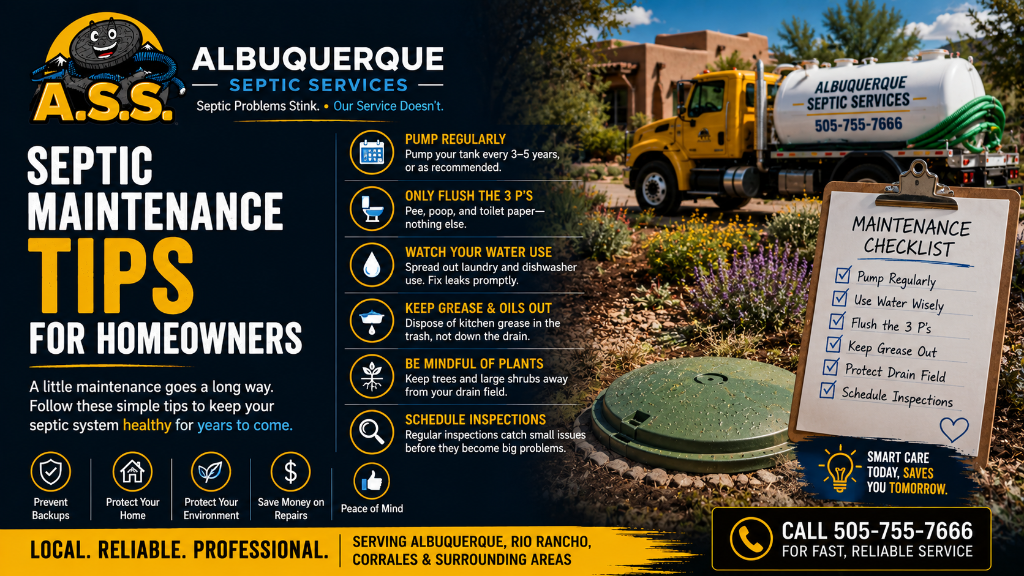
The single most effective thing you can do is pump your tank on schedule — every 3 to 5 years for most Albuquerque households. A tank that never overfills is a tank that almost never backs up.
Strategy 2: Be Strict About What Goes Down the Drain
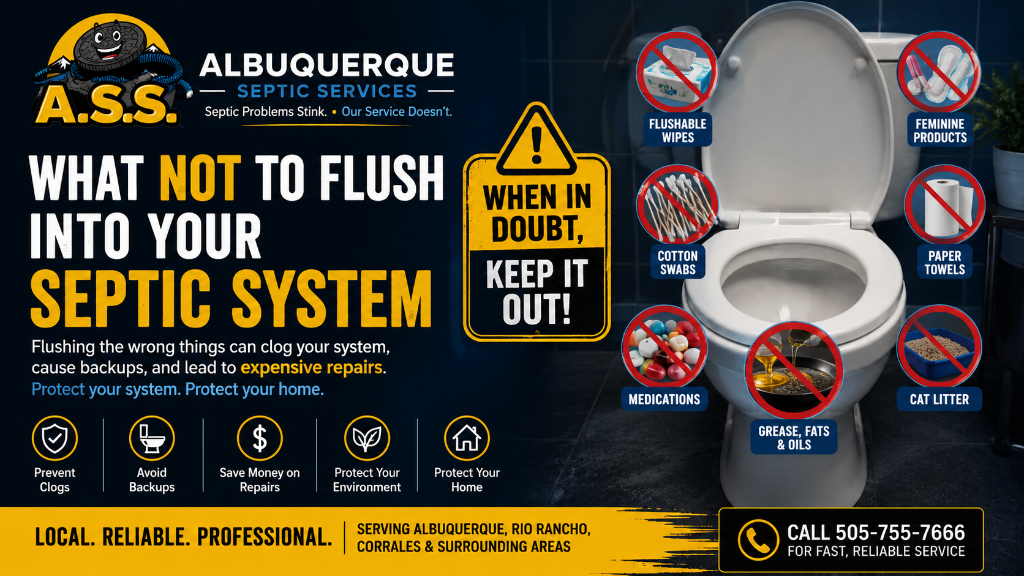
Only flush human waste and toilet paper. Avoid:
- Wipes (including "flushable" brands)
- Grease and cooking oils
- Paper towels and tissues
- Feminine hygiene products
- Chemical drain cleaners
Each of these either adds solids, clogs pipes, or kills the beneficial bacteria that keep your tank functioning.
Strategy 3: Spread Out Water Usage
Overloading your system with high water volume in a short period can overwhelm it. Stagger laundry loads throughout the week instead of doing five loads on Saturday. Avoid running the dishwasher and multiple showers simultaneously.
Strategy 4: Protect the Drain Field
Your drain field is just as critical as the tank itself:
- No vehicles or heavy equipment over the drain field — compaction crushes pipes
- Direct runoff away — extra water saturates the field and reduces capacity
- Keep trees and shrubs back — roots seek moisture and will invade drain lines
- Only grass over the field — no gardens or deep landscaping projects
Strategy 5: Annual Inspections
Especially for older systems or large households, annual inspections catch problems before they escalate. Early detection is always far cheaper than emergency repairs.
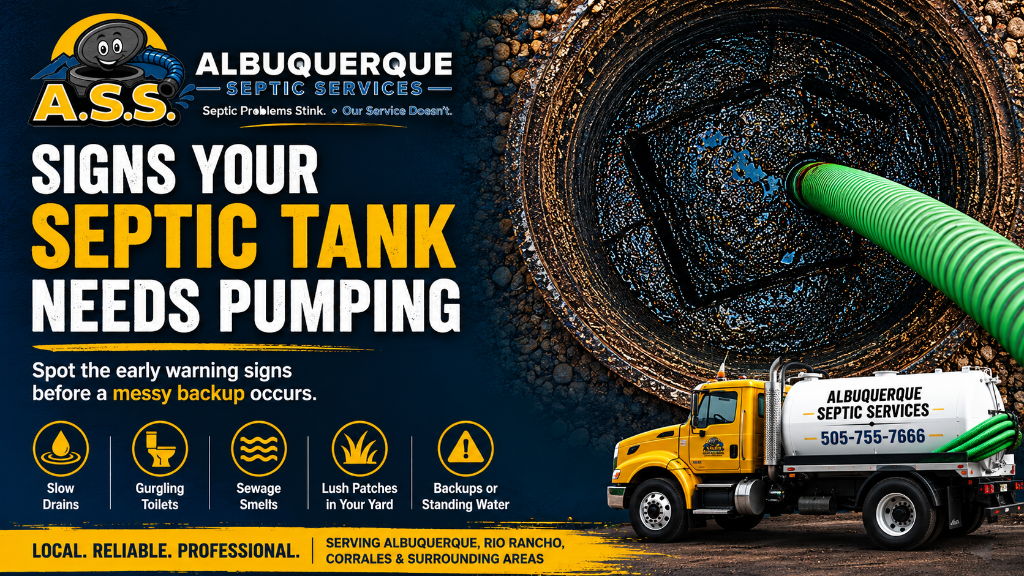
Warning Signs of an Imminent Backup
Act immediately if you notice:
- Multiple slow drains at the same time
- Gurgling sounds when flushing
- Sewage odors indoors
- Wet spots or odors near the drain field
Stop using water-intensive appliances and call us right away. Catching it at this stage can prevent a full backup entirely.