The Homeowner's Complete Septic Maintenance Guide
Your septic system is one of the most important — and most overlooked — systems in your home. Unlike your roof or HVAC, it's hidden underground, so it's easy to forget about. But with simple habits and a regular service schedule, it can serve you reliably for decades.
Here's everything you need to know.
Know Your System
Before you can maintain your system, understand what it consists of:
The Septic Tank Wastewater from your home flows into the tank. Solids settle to the bottom as sludge, grease floats to the top as scum, and clarified liquid (effluent) flows out to the drain field.
The Distribution Box Distributes effluent evenly across the drain field.
The Drain Field (Leach Field) A network of perforated pipes buried in gravel that allows effluent to slowly absorb into the surrounding soil.
Know where each component is located on your property — it matters.
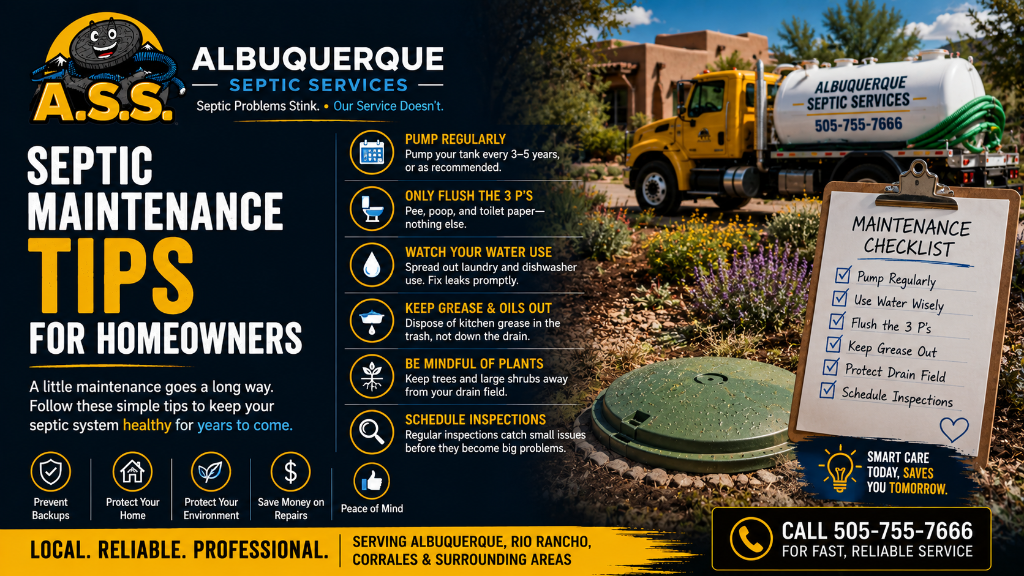
Tip 1: Pump on a Regular Schedule
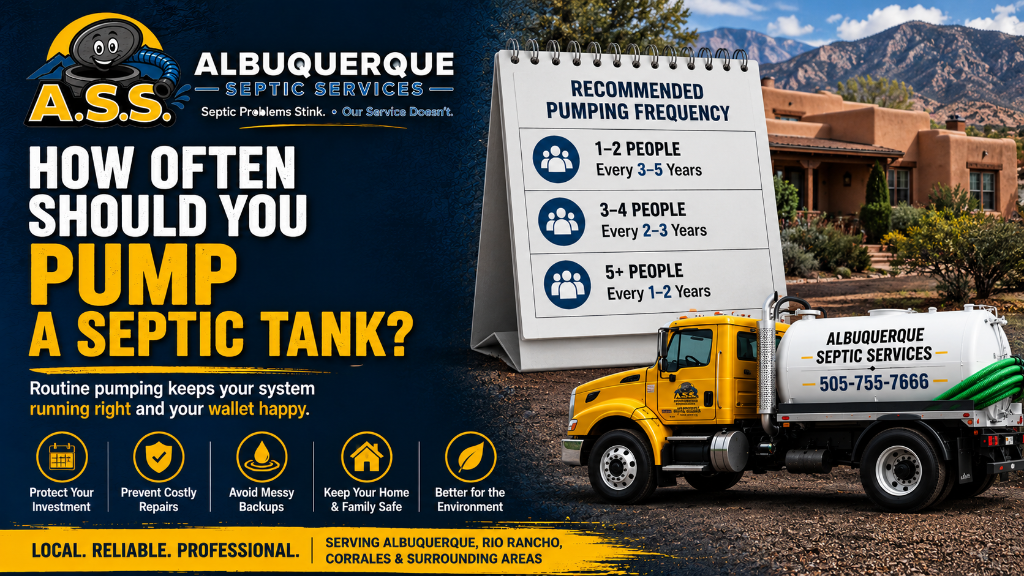
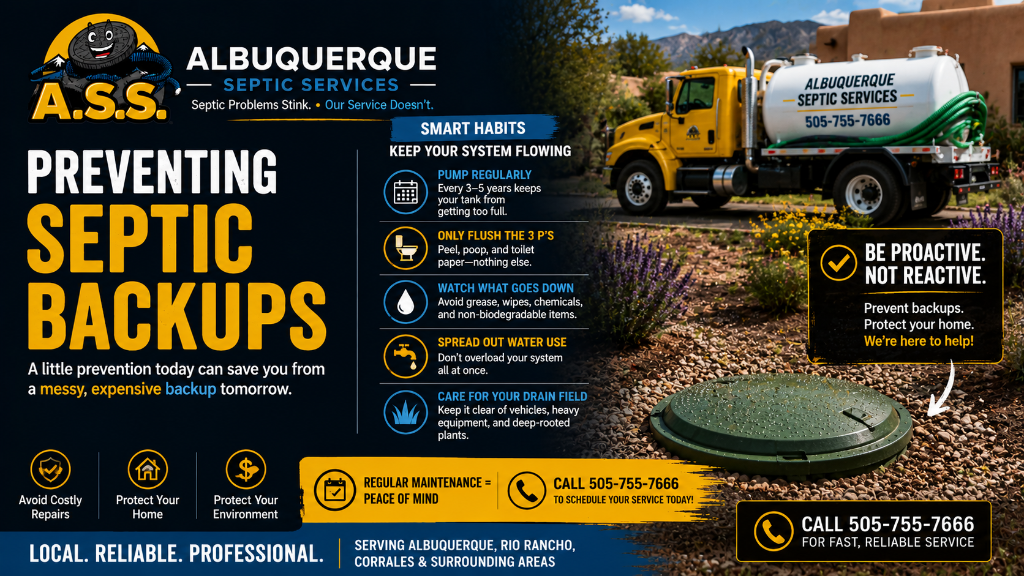
Pump your tank every 3–5 years — sooner if your household uses a garbage disposal frequently or if you notice slower drain performance. This is the single most important maintenance task you can do. Skipping it is the root cause of most septic failures we see in Albuquerque.
Tip 2: Keep Service Records
Every time your tank is serviced, record:
- Date of service
- Sludge and scum levels noted by the technician
- Any issues identified
- Next recommended service date
These records are valuable for home resale and help you stay on track.
Tip 3: Be Drain-Conscious as a Household
Make drain habits a family conversation. Everyone in the home — including kids — should know the basics:
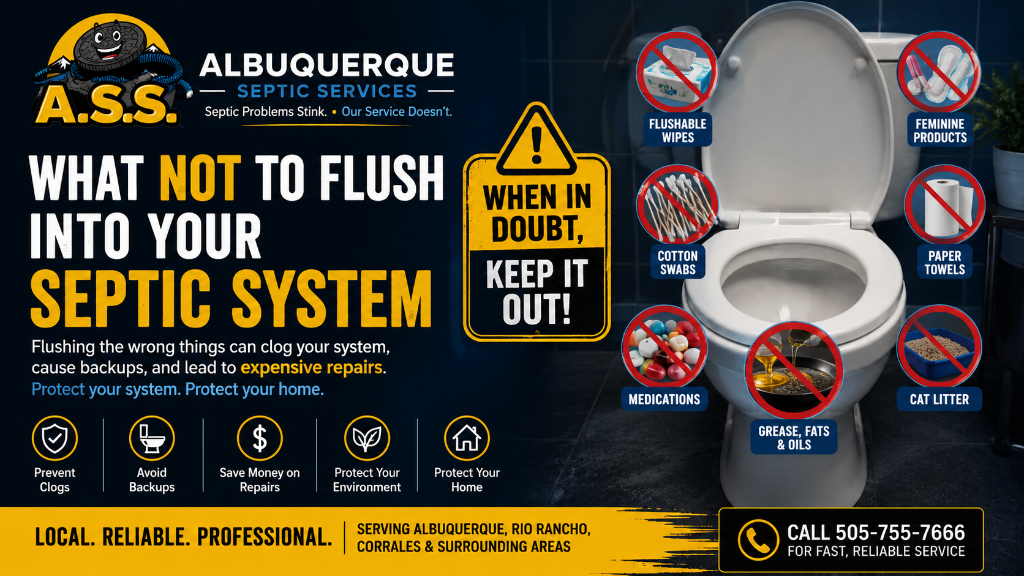
- Only flush the three P's (Pee, Poop, Paper)
- No grease down any drain
- No wipes — ever
Tip 4: Conserve Water
Every gallon entering your septic system must be treated and dispersed. Less water = less stress on your system. Ways to reduce:
- Fix leaky faucets and running toilets promptly
- Install low-flow fixtures
- Run full loads in the dishwasher and washer
- Stagger water-heavy tasks throughout the week
Tip 5: Protect the Drain Field
- Keep vehicles, heavy equipment, and livestock off the field
- Direct roof runoff, downspouts, and sump pump discharge away from the field
- Plant only grass over the drain field — no trees or shrubs
- Mark the field boundaries so future contractors don't accidentally dig there
Tip 6: Choose Septic-Safe Products
Switch to septic-safe versions of:
- Toilet paper (single-ply dissolves fastest)
- Cleaning products and laundry detergent
- Dish soap
Avoid antibacterial soaps in large quantities and bleach-heavy products — they disrupt the bacterial ecosystem your tank depends on.
Tip 7: Get Professional Inspections
For systems older than 20 years, or large households, annual inspections are worth the investment. A professional can identify root intrusion, cracked pipes, and failing drain field components early — when repairs are still manageable.
Your Local Septic Partner
Albuquerque Septic Services is here for homeowners throughout Albuquerque, Rio Rancho, Corrales, Bernalillo, Placitas, and Sandoval County. We handle inspections, routine pumping, and repairs — all at straightforward, honest pricing.