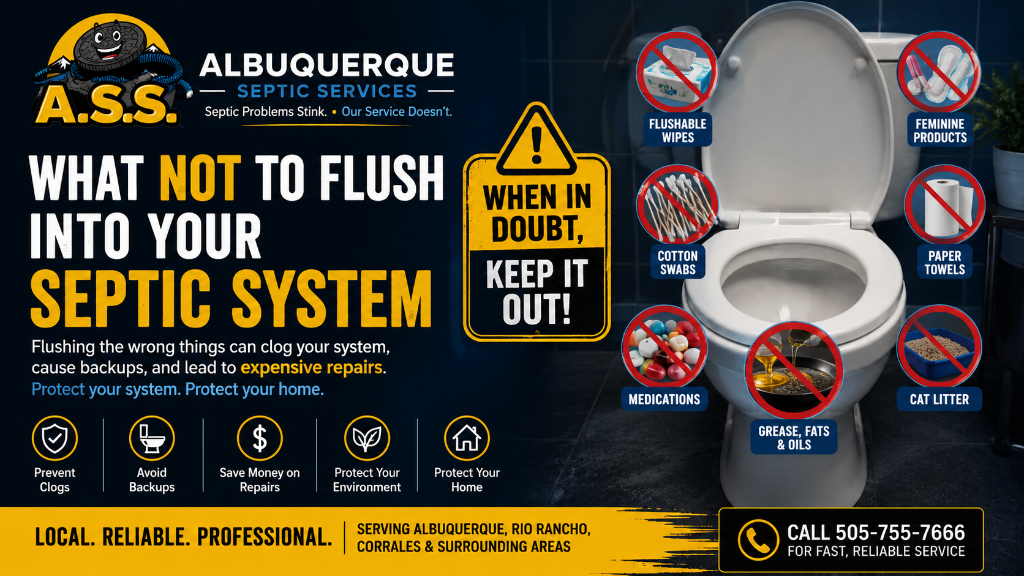
What You Should Never Flush or Pour Down the Drain
Your septic system is an engineering marvel — but it's not invincible. One of the biggest causes of premature septic failure is putting things down the drain that the system simply wasn't designed to handle.
Here's the complete guide to protecting your septic system throughout New Mexico.
The Golden Rule of Septic Systems
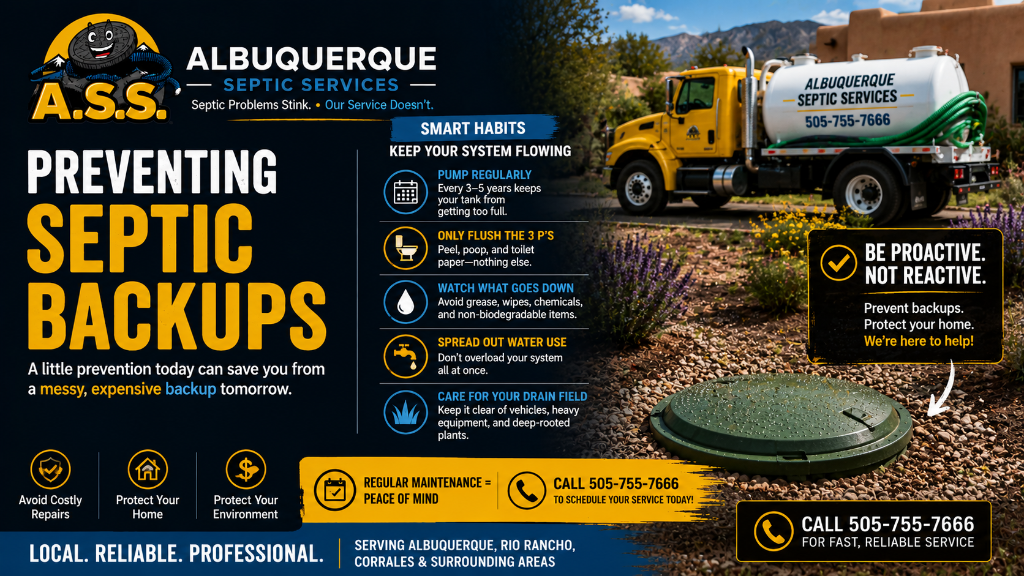
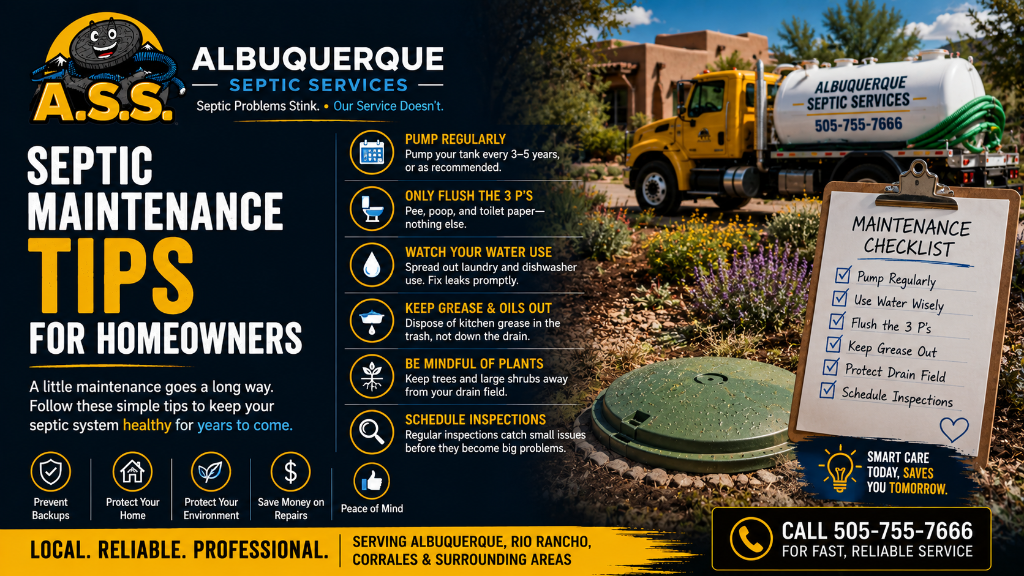
Only flush the three P's: Pee, Poop, and (toilet) Paper.
Everything else? Find another way to dispose of it.
Never Flush These Items
Wipes — Even "Flushable" Ones
Despite what the packaging says, "flushable" wipes do not break down in septic systems. They accumulate in your tank and can clog drain lines. This is the #1 septic problem we see across Albuquerque.
Feminine Hygiene Products
Tampons, pads, and applicators should always go in the trash. They don't dissolve and cause serious blockages.
Paper Towels and Tissues
Regular toilet paper is engineered to break down in water. Paper towels and facial tissues are engineered not to — which makes them a serious problem in septic systems.
Dental Floss and Cotton Products
Floss doesn't break down and can wrap around other debris, creating rope-like blockages. Cotton balls and Q-tips clump together and don't dissolve.
Medications and Pharmaceuticals
Old medications introduce chemicals that kill the beneficial bacteria your septic tank needs to function. Take unused medications to a local pharmacy drop-off event instead.
Never Pour These Down the Drain
Cooking Grease and Oil
Grease solidifies in your pipes and tank over time, causing serious blockages. Let it cool and dispose of it in the trash.
Paint and Household Chemicals
Bleach, paint, solvents, and cleaning chemicals kill the bacteria that make your tank work. Your system relies on living bacteria to break down waste.
Cat Litter
Even "septic-safe" cat litter can cause problems. The clay in most formulas doesn't break down and adds unnecessary solids to your tank.
Garbage Disposal Waste (in Excess)
Garbage disposals significantly increase the solid load in your septic tank. If you use one, use it sparingly and plan on more frequent pumping.
What IS Safe to Flush
- Regular toilet paper (single-ply breaks down fastest)
- Human waste
- Water from showers, sinks, and laundry
- Septic-safe cleaning products (look for the label)
Protect Your Investment
A septic system that's properly cared for can last 25–40 years. One that's constantly stressed with non-flushable items may fail in 10. The small habit changes above can add decades to your system's life — and save you thousands in repairs.